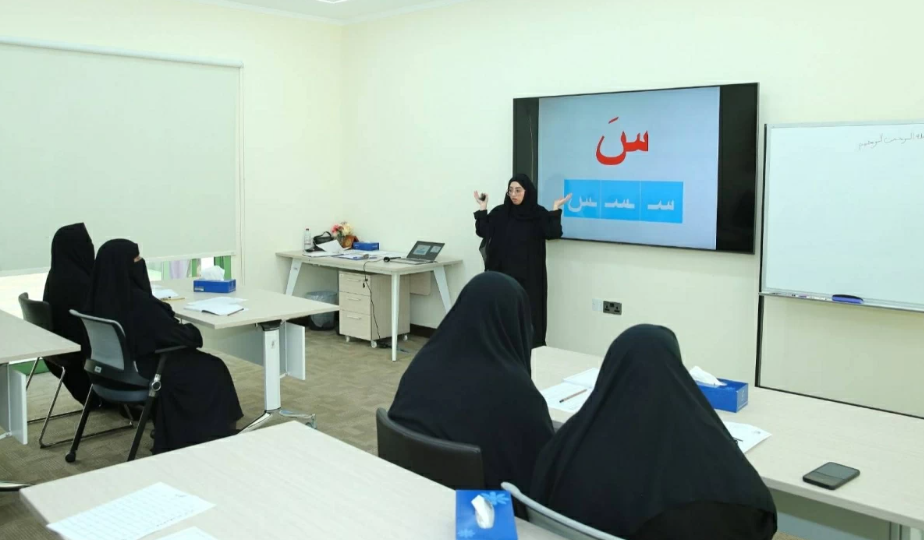
"Knowledge is Light" Initiative Teaches Senior Citizens and Residents to Read
Aisha Al Salami, head of the Barakat Al Dar Social Clubs at the Foundation, said: "Hosting this initiative gives senior citizens and residents who never learned to read and write the chance to acquire those basic skills, and it affirms that learning is open to people at every stage of life. It also creates space for community engagement, encourages a culture of volunteering and social responsibility among the university's students and our senior members, and supports productive collaboration between community organizations and the Family Development Foundation."
Al Salami added that the initiative serves several purposes. It gives participants the opportunity to build educational and cognitive skills. It strengthens self-confidence by encouraging members of the Barakat Al Dar Social Clubs to try, take part, and express themselves, and to see their progress as they advance. It supports independent daily living by helping participants read simple words and phrases and write what they need in their everyday lives. It also builds ties between generations, as participants form positive relationships with the university's students and learn from one another's experience. Throughout, the program emphasizes the use of Arabic in daily communication and connects learning to local values and culture.
Women students from the university help develop the curriculum and deliver the lessons and practice sessions to participants, under accredited academic supervision.