The Center for Philosophical Studies at Mohamed Bin Zayed University for Humanities presents
The Second International Philosophy Conference
Philosophy and the Bet on Theoretical and Social Progress
February 6–7, 2024
Introduction
Philosophy is distributed across three basic demands: theoretical requirements, which involve a critical review of the intellectual and cultural systems forming the basis of our worldview; practical requirements, which question theoretical and social existence from philosophical references that played a major role in formulating a reasonable understanding of such questions; and requirements that harmonize both, taking the form of a synthesis between theoretical and practical concerns, dominated by the quest to coordinate between knowledge and values on one hand, and between theory and application on the other. When we ask "how can there be great philosophy?" we answer, with Vincent Citot, that it is the philosophy where all these requirements come together.
From this division, what is required is harmony between the theoretical and conceptual side — drawn from the history of philosophy — and the practical side that opens the door for us to think about issues of society, politics, ethics, and coexistence. However, the contemporary philosophical field is no longer furnished with the traditional major topics of philosophy; it has become a field for thinking about questions whose novelty and sensitivity for contemporary humans no one disputes. Even ancient questions — those related to politics, justice, virtue, duty, freedom, and existence — are now posed in the context of a tense awareness of a gap separating our times from the philosophical heritage and its major propositions.
There is no doubt that the question of progress remains at the top of important questions enjoying philosophical priority today. This concept has managed to impose itself even on its staunchest critics. What concerns us about thinking about progress, and elevating it to the level of philosophical bet, is questioning the extent to which philosophy today can contribute to the advancement of human societies, especially in the face of fierce competition from other forms of human knowledge — often seen by philosophy's opponents as strong evidence of philosophy's end and death — such as the development of social and human sciences, and the unprecedented revolutions in artificial intelligence that force us to rearrange our understanding of humanity itself. The growing awareness of the severity of the economic factor, and its transformation into a cornerstone of savage globalization, has led to philosophy's openness to economics and its fields of knowledge.
Given this situation, we must ask about the value of philosophy in the Arab-Islamic context and its major challenges. The Center for Philosophical Studies at Mohamed Bin Zayed University for Humanities organizes its annual conference on February 6–7, 2024 under the title "Philosophy and the Bet on Theoretical and Social Progress," inviting reflection through the following philosophical themes:
Conference Themes
Conference Objectives
Participation Conditions
Scientific Committee
 Dr. Najla Al Naqbi
Deputy Vice Chancellor for Academic Affairs
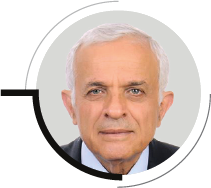 Prof. Ridwan Al Sayyid
Dean of Graduate Studies and Scientific Research
 Prof. Ibrahim Bourchachen
Director of the Center for Philosophical Studies
 Dr. Sabreen Zaghloul
Member of the Center for Philosophical Studies
 Dr. Fathi Inqazou
Member of the Center for Philosophical Studies
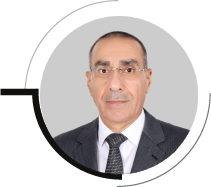 Dr. Suleiman Al Dhahir
Professor at Mohamed Bin Zayed University for Humanities
Important Dates and Information
Important Links
Conference Video - Day 1
Conference Video - Day 2
Correspondence
Abstracts and papers (electronic copy) should be sent via the registration link, following the university's documentation methodology.
📞 For inquiries, contact: 0097124998483
📧 Conference email: Psc.events@mbzuh.ac.ae