Muhammad, the World-Changer: An Intimate Portrait
Mohamad Jebara
Reviewed by:
Wadeema Al Dhaheri
Faculty Member - Mohamed bin Zayed University for Humanities
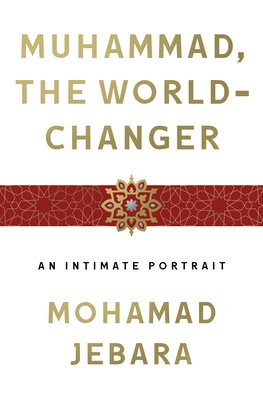
Muhammad Jabara's book "Muhammad, the World-Changer: An Intimate Portrait" represents an advanced academic attempt to re-establish the prophetic narrative outside the dual frameworks of deliberate distortion and excessive sanctification, achieving what might be called a "methodological renaissance" in the study of contemporary Prophetic biography. Unlike many traditional Islamic biographies that tend to avoid complex issues or present a simplified idealized image, this work dares to delve with analytical depth into fundamental and controversial topics, including Muhammad's stance on slavery and women's rights, presenting a balanced vision that seeks to understand these issues within their historical and social context.
This critical-analytical approach places the work in an advanced scholarly context that transcends traditional religious and ideological boundaries, establishing a new model for understanding great historical figures as complete human personalities rather than mere abstract symbols or sacred icons distant from lived human reality.
Behind this innovative methodology stands Jabara, a researcher specializing in sacred texts and a distinguished interpreter known for his eloquent rhetorical style and continuous efforts to bridge cultural and religious gaps. Jabara is a scholar of semantics and language and a historian specializing in Semitic cultures, who has worked in numerous academies specializing in the Quran and Arabic language, and authored 109 books on various subjects. This diverse scholarly formation enables him to establish his research approach from a unique scientific position combining depth of academic specialization, richness of personal experience, and comprehensiveness of civilizational vision.
From this methodological foundation, the importance of this work manifests in its presentation of an innovative methodological alternative to traditional narratives of the Prophetic biography, while developing new concepts for understanding unity in diversity, continuity in change, and flexibility in facing challenges. This work provides a unique model for studying great historical figures as complete and complex human personalities combining greatness and ordinariness, idealism and realism.
In "The Introduction: Muhammad Beyond Stereotypes," Jabara establishes an advanced theoretical framework adopting a new approach to dealing with the Prophetic biography. He begins with a moving personal confession: "I have lived with Muhammad all my life: I was given his name the day I was born, and yet I knew nothing about him for years." This confession reveals the deep cultural contradiction: "There were two conflicting messages: my Muslim cultural people revere Muhammad as a model of absolute perfection, and my popular Western culture presents him as a wild warrior. I had to resolve this contradiction."
This contradiction reflects a deep civilizational problematic requiring sophisticated methodological solutions, laying the foundation for Jabara's scholarly project: the search for a sophisticated third understanding that transcends both excessive sanctification and unjust distortion, seeking a balanced and human image of the prophetic personality based on precise scientific analysis and deep critical understanding.
Through this methodological framework, the book establishes a new understanding of the prophetic personality by developing the concept of "mindset" as a comprehensive theoretical framework that transcends traditional political, geographical, and temporal divisions to focus on the complex psychological, social, cultural, and spiritual dynamics that shaped Prophet Muhammad's leadership personality and influenced the formation of his comprehensive civilizational vision.
Part One: Roots of the Mindset
In Part One, "Roots of the Mindset," Jabara develops an innovative theoretical concept—the concept of foundational formation that shaped the referential framework and basic perceptual lens through which Prophet Muhammad viewed the world around him, understood his place in it, and his role in shaping its future. These interconnected elements—from the unique name carrying a bold mission, to the orphan experience that shaped his personality, to the phase of multicultural training and learning—were not merely abstract theoretical analytical tools but precise reflections of the actual ways of thinking and practical methods Prophet Muhammad used to understand his complex social, economic, and political reality.
1- A Unique Name: Laden with a Bold Mission
Jabara begins his analytical journey from the most fundamental starting point: the name and its symbolic and civilizational meaning. He presents a deep philological analysis of the name "Muhammad," showing how "on the day he was born, Muhammad was given a unique name—and with it a mission to be a model of positive behavior to inspire others." The name "Muhammad" (from the root h-m-d, meaning praise and commendation) is not merely an ordinary name but carries within it an ambitious future vision and a clear life mission.
As Jabara explains with linguistic and semantic depth, this name carries high expectations and a civilizational message that transcends the individual to reach society and humanity. This deep linguistic analysis reveals the multiple layers of meaning and symbolism this unique name carried in the cultural and social context of the Arabian Peninsula in the sixth century CE.
The experience of the name and its connotations was not merely a historical coincidence but the beginning of a comprehensive civilizational project aimed at transforming society by presenting a positive model to follow. This model of leadership and influence transcends the boundaries of time and space to reach the heart of human experience in the search for meaning, purpose, and positive impact.
In one of the most powerful psychological and social analyses, Jabara reveals a pivotal scene: "A six-year-old child crying in his mother's arms as she breathes her last and urges him: 'Muhammad, be a world-changer!' The boy, suddenly orphaned in a tribal society fearful of any change, must overcome enormous obstacles to unleash his own potential and inspire others."
This scene transcends emotional description to become a deep analysis of the foundational moment that shaped the course of Prophet Muhammad's life. The orphan's experience in tribal society was not merely emotional loss but an enormous existential, social, and economic challenge.
As Jabara explains, Muhammad became an orphan at age 6, "even his status as an orphan in a strict patriarchal society meant he immediately became an outcast with few opportunities." But the Prophet "endured terrible setbacks and painful suffering, transforming his brokenness into a towering rock, unleashing latent capabilities for improving the world."
Here emerges an advanced psychological and social model for transforming personal traumas into sources of strength and inspiration rather than destructive obstacles. This model transcends religious and cultural boundaries to reach the heart of shared human experience in facing adversity.
The orphan experience shaped an exceptional capacity for empathy with the marginalized and weak, which was later reflected in his message that paid special attention to caring for orphans, widows, and the poor. This transformation from personal pain to public mercy demonstrates the prophetic personality's ability to transcend personal wounds in service of humanity.
The orphan experience also taught him self-reliance and survival in difficult circumstances—fundamental skills that later helped him face the challenges of his mission and message.
3- The Seeker of Knowledge
Jabara reveals the pluralistic civilizational environment in which Prophet Muhammad grew up and received his formation, refuting claims about the Arabian Peninsula in the sixth century CE as an insular or monocultural environment. Rather, he highlights a vibrant world rich with civilizational interaction and knowledge exchange.
Part Two: Shaping the Mindset
From this solid theoretical foundation, Jabara transitions in Part Two, "Shaping the Mindset," to a deep exploration of how foundational bases transformed into practical and leadership practices. Here we discover that the practical activities in Prophet Muhammad's life were not merely technical activities separate from religious values and spiritual beliefs but were integrated into a comprehensive cosmic vision governing all aspects of human life.
4- The Businessman: Becoming a Man Who Makes an Impact
Jabara traces "Muhammad's steps in the Arab deserts to establish a beloved biography of his journey from orphan to merchant to political leader," refuting the simplistic view of his professional life. Rather, he highlights a complex path rich with formative experiences and leadership lessons.
Prophet Muhammad emerged as a successful merchant combining "integrity, justice, trust, and social responsibility; the ability to manage resources and deal with people from different backgrounds; and understanding market and community needs."
5- The Prophet: Inspiring Others
This deep section addresses one of the most sensitive and complex aspects of the Prophetic biography: the experience of revelation and the beginning of prophethood. Jabara presents here a balanced analysis that transcends mere sanctification and unjust skepticism to offer a deep human understanding of this exceptional experience.
"The process of revelation, including the shocking physical and emotional impact that initially frightened Muhammad and made him ill—which forever shaped a reluctant prophet who was inspired by his message but long struggled about how best to share it." This honest analysis presents a complex, multi-dimensional image of the prophetic experience, away from traditional simplification.
6- The Boycott: Transforming Adversity into Opportunity
This section analyzes one of the most difficult periods in Prophet Muhammad's life: the period of boycott and economic and social siege imposed by the Quraysh on him and his followers. Here, Jabara shows how the Prophet dealt with existential challenges and fierce opposition in innovative and strategically advanced ways.
Part Three: Applying the Mindset
From this deep understanding of the formative and developmental framework, Jabara turns in Part Three, "Applying the Mindset," to revealing and analyzing the pivotal role played by the developed prophetic mindset as an advanced civilizational institution extending geographically across continents and temporally across generations.
This pivotal section shows how the early Islamic community in Medina was founded on principles of pluralism, coexistence, and social justice. Medina here is not merely a geographical place but a revolutionary model of the ideal society that absorbs diversity and transforms it into a source of strength and mutual enrichment.
As Jabara explains, drawing on the philosopher al-Farabi, "the city is not a place but the way people come together." This revolutionary concept of the city as a social and civilizational model, rather than merely a residential agglomeration, demonstrates the depth and comprehensiveness of the prophetic vision.
8- The Great Trial
This section focuses on the decisive moments facing the Prophet and his community, and how they were handled with strategic wisdom and advanced leadership insight. The Battle of the Trench (al-Khandaq) is considered an ideal model for dealing with existential challenges through innovative and unconventional strategic means.
9- Victory: Establishing the New Merit-Based Order in Arabia
This vital section reveals one of Prophet Muhammad's most important civilizational achievements: establishing a new social and political system based on merit, competence, and ethics rather than lineage, wealth, and traditional tribal status.
The conquest of Mecca was not merely a military victory but a practical application of a new model for dealing with victory and power. Instead of revenge and retaliation, Prophet Muhammad chose the path of pardon, forgiveness, and positive integration of former opponents into the new system.
10- Islam: Preserving Core Ideals for Future Generations
This concluding section shows how Prophet Muhammad achieved the fundamental goal his dying mother set for him: to become a "world-changer." This change was not temporary or superficial but a radical transformation in humanity's way of thinking and understanding the world, existence, values, and ethics.
Jabara explains: "Muhammad achieved his dying mother's wish, changing the world with a philosophy that emphasized empirical knowledge over dogma, pioneering the scientific method and helping launch modernity, inspiring algebra, algorithms, and even the camera."
The great scientists of Islamic civilization drew inspiration from his intellectual method and applied his mindset of learning and creativity to their various specializations, producing exceptional scientific achievements.
Islam, as Jabara presents it, established a comprehensive methodology for life based on balance between the spiritual and material, individual and collective, theoretical and practical. This comprehensive methodology enabled Islamic civilization to achieve exceptional accomplishments in various fields of knowledge, sciences, and arts.
Jabara notes that "jahiliyyah is not an era but a mindset—and deliberate stagnation can happen among any people." This revolutionary concept makes the Muhammadan message a permanent and renewable call for progress, development, and civilizational flourishing.
In the book's conclusion, Jabara presents one of the most revolutionary concepts: redefining the concept of legacy and succession from the biological to the intellectual and civilizational concept. As Prophet Muhammad declared: "My descendants are those who preserve my legacy!" This revolutionary statement transcends lineage boundaries to establish a broader concept of belonging and civilizational continuity.
Jabara affirms that "his mindset is not tied to Mecca or Medina," but "people from any culture or race can establish 'a place of flowing change.'" This global perspective makes the prophetic legacy a source of inspiration for all of humanity.
The book "Muhammad, the World-Changer: An Intimate Portrait" is not merely a biography of a historical figure but a practical guide for transforming challenges into opportunities, adversities into sources of strength, and differences into sources of enrichment. It is a book for the age, speaking in contemporary language about eternal values and offering historical solutions to contemporary problems.
This work is distinguished by presenting a comprehensive approach combining academic precision with contemporary clarity, making it an indispensable reference for researchers, leaders, and thinkers alike. Jabara's methodology of connecting past to present opens new horizons for understanding how to build societies capable of development and flourishing amid diversity and complexity.
What makes this work exceptional is Jabara's ability to rediscover the prophetic personality as a universal and human source of inspiration, not merely a limited religious symbol. He has succeeded in transcending sectarian and cultural boundaries to present a leadership model from which all of humanity can benefit, regardless of religious or cultural backgrounds.
This book constitutes an important qualitative addition to the Arab and international academic library, an advanced methodological model for understanding complex civilizational interactions, and a valuable intellectual tool for facing the challenges of the modern era through a deep and renewed understanding of Islamic and human heritage.